
Aerosol
Fire Extinguishing

Discover the transformative power of aerosols. From personal care to industrial applications, aerosols offer convenience and precision in dispensing products. In industries such as automotive, aerospace, and manufacturing, aerosols play crucial roles in lubrication, cooling, and surface treatment processes. They enable precise application of lubricants, protectants, and coatings, enhancing efficiency and product quality.
Furthermore, aerosols are invaluable tools in environmental research and monitoring. Scientists utilize them to study atmospheric pollutants, trace gases, and climate-altering particles. Aerosol research contributes to understanding air quality, climate change, and their impacts on ecosystems and human health.

Aerosol fire extinguishing working principle
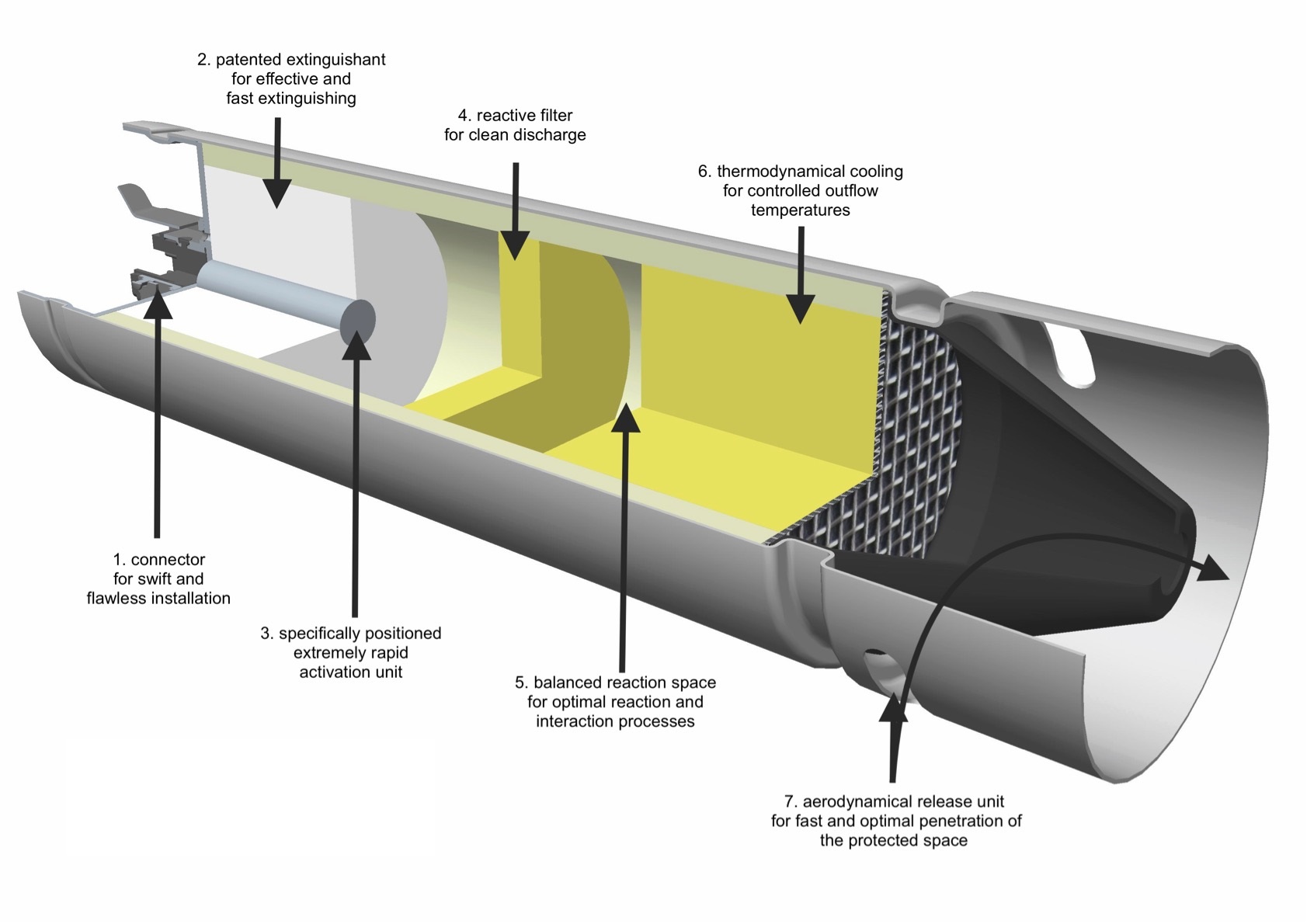
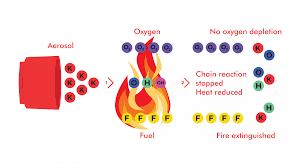
The four elements of combustion: combustibles, oxidizer, temperature and uninhibited chain reaction. The fire extinguishing mechanism of fire extinguishing gas is to eliminate one or several of the four elements of combustion.
The solid fire extinguishing agent in the S-type aerosol fire extinguishing device is started by electricity, and it undergoes redox reaction to form a large number of agglomerated fire extinguishing aerosols, and its composition is mainly N2, a small amount of CO2, and metal salt solid particles.
No harm to human body, high fire extinguishing efficiency, less fire extinguisher consumption, weight and space saving, environmentally friendly, easy installation, extremely low maintenance cost, and cost saving. The small aerosol fire extinguisher belongs to the total submerged system. Under the condition of controlling the fire source, the full submerged fire extinguishing is gradually completed, so that people have enough time to evacuate and escape.