
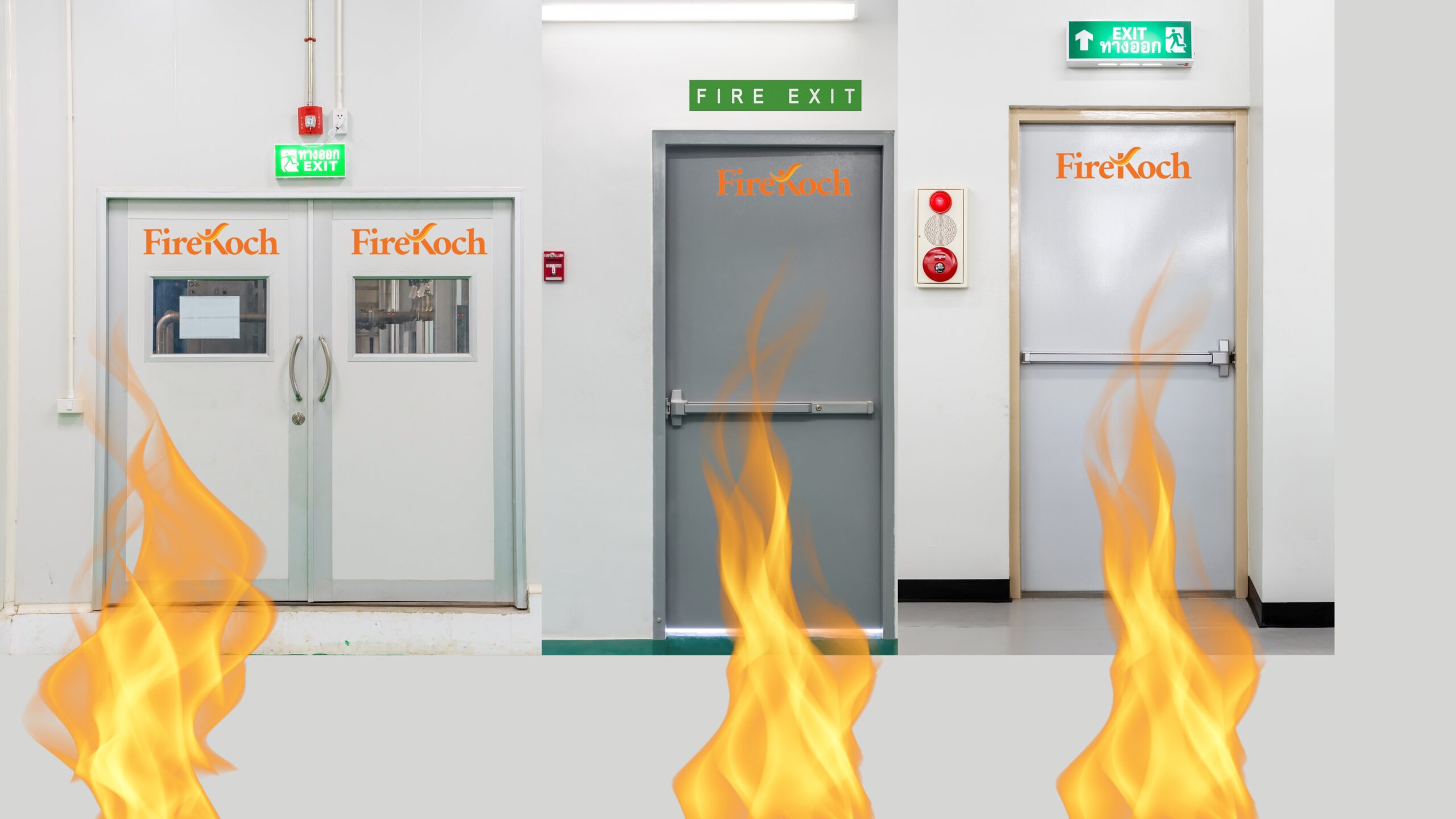
Fire doors are crucial safety features in buildings, designed to prevent the spread of fire and smoke between different sections. They play a vital role in maintaining structural integrity and ensuring the safety of occupants by providing a barrier that contains fires, allowing safe evacuation, and providing time for firefighters to control the blaze. This article explores the types, components, functions, and importance of fire doors in fire safety.
Types of Fire Doors
- Timber Fire Doors:
- Description: Made from solid timber or composite materials, often with a fire-resistant core.
- Applications: Common in residential buildings, offices, and commercial establishments.
- Steel Fire Doors:
- Description: Constructed from steel, providing high durability and resistance to fire.
- Applications: Typically used in industrial settings, high-risk areas, and buildings requiring higher fire resistance.
- Glass Fire Doors:
- Description: Made with fire-resistant glass, often used in combination with steel or timber frames.
- Applications: Used in buildings where visibility and aesthetics are important, such as offices and public buildings.
- Composite Fire Doors:
- Description: Constructed from a combination of materials like timber, steel, and glass to provide balanced performance.
- Applications: Suitable for various building types, offering flexibility in design and function.
Components of Fire Doors
- Door Leaf:
- Function: The main part of the door that swings open and closed, designed to withstand high temperatures.
- Materials: Typically made from fire-resistant materials like timber, steel, or composites.
- Frame:
- Function: Supports the door leaf and provides a secure fit within the wall.
- Materials: Often constructed from timber or steel, ensuring durability and fire resistance.
- Seals:
- Types: Intumescent seals that expand when exposed to heat, and smoke seals that prevent smoke from passing through.
- Function: Prevent the spread of fire and smoke through gaps around the door.
- Hinges and Hardware:
- Function: Specialized fire-rated hinges, locks, and handles ensure the door remains functional and secure during a fire.
- Materials: Made from fire-resistant metals to maintain integrity under high temperatures.
Functions and Importance of Fire Doors
- Containing Fire and Smoke:
- Purpose: Fire doors compartmentalize a building, containing the spread of fire and smoke to specific areas.
- Impact: Limits damage to property and provides a safer environment for occupants and emergency responders.
- Ensuring Safe Evacuation:
- Purpose: Fire doors provide protected escape routes for occupants to evacuate safely during a fire.
- Impact: Reduces the risk of injury and fatalities by maintaining clear and safe pathways.
- Protecting Structural Integrity:
- Purpose: By containing the fire, fire doors help to protect the structural components of a building from heat and flames.
- Impact: Prevents collapse and maintains the building’s integrity, aiding firefighting efforts and reducing repair costs.
- Regulatory Compliance:
- Purpose: Fire doors are required by building codes and fire safety regulations to ensure minimum safety standards.
- Impact: Compliance with regulations ensures legal occupancy and operation of the building, avoiding penalties and enhancing safety.
Conclusion
Fire doors are an integral part of a building’s fire safety system, offering essential protection by containing fire and smoke, ensuring safe evacuation routes, and preserving structural integrity. Understanding the types, components, and functions of fire doors is crucial for building owners, designers, and occupants to ensure optimal fire safety and compliance with regulations. Investing in quality fire doors and proper maintenance can significantly enhance the safety and resilience of any building.